.svg)
Most environmental resources do not, formally, have a recognised market price. However, it is generally recognised that nature provides free goods and services that are important to our society, many of which are essential for our survival. This is the basis of so-called ‘green economy’.

In a smart home, many of the appliances will be networked together, allowing access and operation through an EMS (Environmental Management System). An EMS provides the ability to turn on the heater or air conditioner from work or keep track of the energy use of specific appliances or equipment - for example tracking the energy use of the pool pump, or seeing how much energy is saved by using the new dishwasher.
The residences connected by smart grids are, in fact, the final component of the network itself. The way energy is consumed, generated and stored (or re-injected in the network) by the end-consumer influences the management of the network. This is a crucial factor when considering the issues regarding sustainability and energy security, which society faces as this technology develops. So we ask: what are smart homes and what are their roles?
The concept of the smart home first emerged several decades ago and predates the smart grid. The vision of the futuristic house was of a residence that supplied services to make life easier for its residents. Daily housekeeping was automated and a host of new devices was introduced. The incorporation of these new appliances, sensors and automation applications for various devices has greatly increased residential electricity consumption.
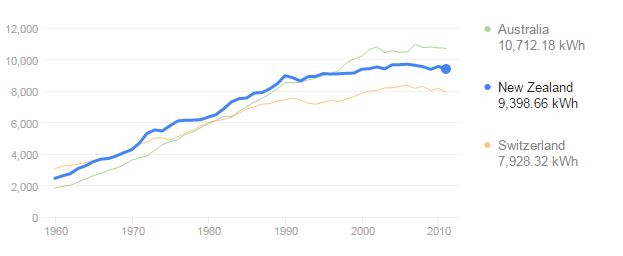
Electricity consumption has advanced rapidly in countries where homes already incorporate the use of many appliances and automated processes. Added to this phenomenon of modernisation, is population aging, which causes people to spend more time at home (and for longer), therefore increasing energy usage further. Having modernised and automated many daily actions, the residential sector now is a key factor in the global demand of electricity.
This is the greatest paradigm shift. While the demand of electricity has increased significantly, scholars of the energy sector defend it as smart homes promote greater efficiency in production and energy consumption as well as increasing comfort by automating various services. To enable this, equipment is built to allow monitoring and control. There is software that turns lights and appliances on and off automatically according to the schedule and habits of its occupants. By incorporating such systems, smart homes are no longer a source of increased energy demand and instead become a source of energy savings, making the most of locally generated sources and taking into account the specific times you need to consume electricity, avoiding consumption at peak hours at higher rates where possible.However, maximising the benefits of the smart home is only possible if the house is well used. It’s no use if the house has a passive ventilation system and an automatic thermostat if the occupants leave the windows open, or schedule the equipment to operate during peak hours.
Therefore, as well as investing in education so that people consume energy more efficiently, economic rewards and penalties were developed to help induce a change in the behaviour of companies and individuals, making them collaborate with the balance of the system. In the past, companies have been most heavily penalised in this way, however domestic customers will soon suffer in similar fashion, with suppliers hiking electricity prices by 99% at the peak time of between 4pm and 8pm.
Several pilot projects using residential tariffs that penalise consumption at peak times led to a reduction in demand of around 13 - 20%. When associated with modern technologies, the reduction was between 27 and 44%. We can conclude that these techniques work in driving down usage, but it is important that specified peak periods are relatively short - up to four hours, for example - as this will facilitate the changing of consumption habits.
It is through good integration with intelligent networks that consumers will get the biggest benefits of houses of the future. Networks can help integrate power generation from new renewable sources produced in homes, as well as promoting the reduction of energy consumption at peak times.
Because smart homes are integral components of the smart grid, their good use is vital to circumvent the problems of sustainability and energy security, which companies face. Successful integration is facilitated with the help of installers, specifically your participation as an installer is critical to the success of integration. It is the installer’s duty to inform the end-users how can they can maximise the use of their thermostat to avoid extra costs. If this doesn’t happen, as more and more end-users misuse their devices the demand for a professional induction will rise.
Please let us know your thoughts in the comment section
Voltimum New Zealand