













The fast evolution of LEDs has revolutionised the global lighting industry. The vast change, though, is not just technical – exciting as that still is – it is also revolutionising the market, as well as the applications for lighting.

To appreciate the enormous changes that have occurred because of the advent of affordable LED lighting systems, just think back a little over ten years. Then, although many homes had at least some compact fluorescent lamps (CFLs), most still used mainly super inefficient (and now banned) incandescents, which were very good at producing heat but very poor at producing light (a mere 5-10% efficient) – albeit that light was nice.
Domestic downlights were then common, but none were LED – virtually all used either low voltage or mains voltage GU type halogen lamps, which were mostly not particularly energy efficient and often didn’t last long.
Offices used mainly modular fluorescent fittings, while retail outlets typically used halogen spot lamps to accent their products, with general lighting being via fixed fluorescent troffers or recessed downlighting in the ceiling. Similarly for many public buildings.
And in food outlets, freezers were lit by fluorescents that were liable to breakage, spilling toxic substances (including mercury) and shattered glass into foodstuffs. Such lamps didn’t like the low temperatures either.
Furthermore, while coloured, dynamically changing lighting systems did exist, they were much rarer than now because older, more traditional light sources and lighting systems were less amenable to this type of dynamic control than modern digital lighting systems.
How this has all changed!
Today’s LED lamps – now widely used - are digital, and their associated optics, luminaires and control systems are very different from conventional types, and yet the applications and dynamics – not to mention colour changing – are now only limited by imagination.
Additionally, LED energy efficiencies are excellent, lamp lives are extremely long, little of no maintenance is required and electrical safety is high because of the relatively low voltages involved. Not only that, but LEDs could have been designed for freezer lighting, being totally unaffected by low temperatures, and they don’t physically break.
Why is this LED revolution taking place? It’s for many reasons. One is that - bearing in mind that lighting accounts for around 19% of global electricity production (according to the International Energy Agency), and that two thirds of the current lighting is based on older, energy-inefficient technologies developed before 1970, a full switch to the latest LED lighting solutions would provide massive energy savings. These, it has been estimated, would average 40%, with a corresponding big reduction in CO2 emissions.
This is crucially important, bearing in mind the recent Paris Climate Change summit, which has resulted in an agreement – some of it legally-binding – that developed and developing countries alike are required to limit their emissions to the relatively safe level of 2oC, with an aspiration of 1.5oC.
However, a downside for the serious lighting manufacturers is that LEDs are now becoming virtually commodity items, with many suspiciously low-cost items on sale from across the world. While high quality LED lighting still costs more to make than the now-banned incandescent lamps, the demand is always for ever-lower prices. This is causing problems for a number of bona fide manufacturers, which have to b ear the high development costs, to the extent that they are starting to look at new business models. It is no surprise that these all include a much greater integration with the Internet of Things (IoT).
New business models include the IoT
As it turns out, it is the fact that LED lighting is digital that is now making the real waves. Being digital, LEDs are controlled very differently from conventional lamps – and in ways that are opening up entirely new possibilities. One of these is connectibility, leading to lighting’s easy integration into the already massively growing IoT. Indeed, Philips, to take just one example, considers lighting to be ‘the foundation of the IoT’ – well, it’s certainly one part of the foundation.
The fast expanding IoT is the buzzword of the moment and there’s no denying the excitement it is causing. With the IoT, just about everything can be IP- or otherwise wirelessly-connected, is being so or can be so. For example, your lighting can ‘talk’ with other devices and systems and to your smart phones and tablets.
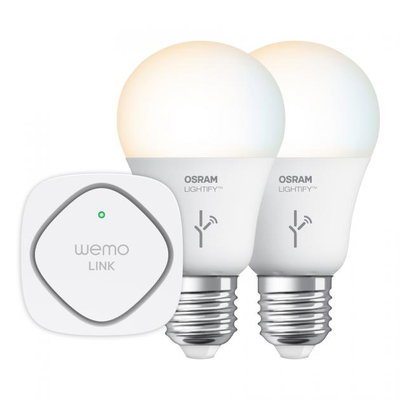
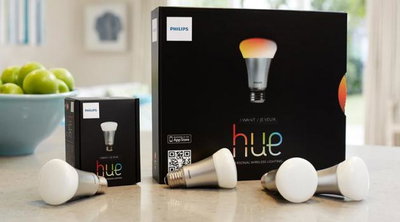
This is happening already, with for example, Philips’ Hue LED lighting system, which is now ‘in bed with’ and talking to Google’s Nest smart thermostat and security devices, plus a fast growing range of varying ‘intelligent’ devices from other manufacturers. OSRAM is doing similarly with its Lightify connected lighting system.
So wireless networking technologies are bringing intelligence to a new generation of smart lighting. It is partly for this reason that key industry figures predict that IT companies may take a significant share of the wireless lighting controls market in the future – likely as part of the IoT. LED based lighting devices combined with wireless technologies are changing the market and finding good opportunities – and are also increasing the business opportunities for switched on electrical contractors and installers.
Yet some in the lighting industry believe that the future is no longer merely in manufacturing LEDs to provide light; because of the almost limitless possibilities offered by intelligent lighting control and the IoT – together with LEDs, which are of course digital devices – the future instead will be much more environmental and all-encompassing.
Examples include circadian lighting (already here), which – for example – can control the amount of blue light throughout the day, from a stimulating ‘biological light’ to a restful ‘biological darkness’. Extended, such lighting has been proven to help the elderly and those suffering from dementia or Alzheimers, especially in care homes. LED lighting can, therefore, improve your health in various ways, such as getting better sleep. LEDs also have the potential to ease pain. So LED lighting now also has a place in the fast-growing healthcare sector.
Then there are, for example, permanent digital ‘skylights’ that change in color and intensity as the day progresses – although these are currently very expensive.
In short, LED lighting, and connected LED lighting, is starting to revolutionise agriculture, reduce traffic accidents and improve urban safety. After all, the clever use of lighting (and not just LED) to boost retail sales has been used in retail outlets and supermarkets for years.
This sort of thing is important for electrical contractors and installers too, because when an LED lasts 15 to 20 years or more, who is going to change them often? It will be more important to be able to work with LED lighting’s connections to the IoT. So, it will be crucial for electrical contractors and installers to learn all there is to know about how to work within the IoT universe with lighting, and with the increasing myriad of other connected devices; how to specify, install and commission them.
See more from Voltimum on Google
Add Voltimum as a preferred source and Google will show our articles more often in your news results.