














Published: 6 December 2016
Category: Industry News
Solar energy also creates valuable benefits for the environment and society at large.

Solar energy creates many benefits for the electricity grid.
- Avoided energy costs: Solar energy systems produce clean, renewable electricity on-site, reducing the amount of electricity utilities must generate or purchase from fossil fuel-fired power plants. In addition, solar photovoltaic (PV) systems reduce the amount of energy lost in generation, long-distance transmission and distribution, which cost U.S. ratepayers about $21 billion in 2014.
- Avoided capital and capacity investment: By reducing overall demand for electricity during high-load daytime hours that form the peak period for most utilities, solar energy production helps ratepayers and utilities avoid the cost of investing in new power plants, transmission lines, distribution capacity, and other forms of electricity infrastructure.
- Reduced financial risks and electricity prices: Because the price of solar energy tends to be stable over time, while the price of fossil fuels can fluctuate sharply, integrating more solar energy into the grid reduces consumers’ exposure to volatile fossil fuel prices. Also, by reducing demand for energy from the grid, solar PV systems reduce its price, saving money for all ratepayers.
- Increased grid resiliency: Increasing distributed solar PV decentralizes the grid, potentially safeguarding people in one region from other areas that are experiencing problems. Emerging technologies, including smart meters and small-scale battery storage systems, will enhance this value.
- Avoided environmental compliance costs: Increasing solar energy capacity helps utilities avoid the costs of installing new technologies to clean up fossil fuel-fired power plants or meeting renewable energy requirements, and avoid the cost of emission allowances where pollution is capped.
Solar energy also creates valuable benefits for the environment and society at large.
- Avoided greenhouse gas emissions: In 2014, the electricity sector was the largest source of global warming emissions—responsible for 30 percent of all total U.S. greenhouse gas pollution. Generating energy from the sun provides a renewable source of energy that produces no greenhouse gas emissions. In 2015, distributed solar energy alone – just solar panels on households and businesses – averted approximately 8 million metric tons of carbon dioxide emissions.
- Reduces air pollution that harms public health: According to the American Lung Association, 44 percent of Americans live in a place where pollution often reaches dangerous levels. Expanding the nation’s ability to obtain clean electricity from the sun reduces our dependence on fossil fuels, and lessens the amount of harmful emissions that flow into the air we breathe.
- Creates jobs and spurs local economies: The American solar energy industry is growing rapidly, creating new jobs and businesses across the nation. In 2015, the solar energy industry added jobs at a rate 12 times that of the overall economy, and as of November 2015 employed more than 208,000 people.
The benefits solar homeowners provide to the grid, and to society generally, are often worth more than the benefits they receive through net metering.
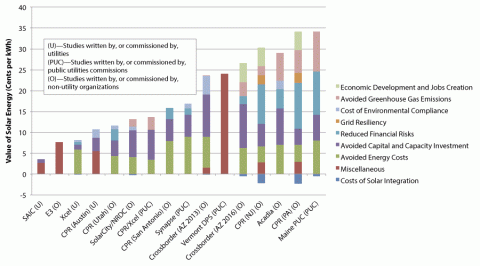
- All 16 analyses reviewed here found that solar energy brought net benefits to the grid.
- 12 analyses out of 16 found that the value of solar energy was worth more than the average residential retail electricity rate in the area at the time the analysis was conducted. Three of the four analyses that found different results were commissioned by utilities. (See Figure ES 1.)
- Of these 16 analyses, the median value of rooftop solar energy was 16.35 cents per kWh, while the average residential retail electricity rate in included states was 13.05 cents per kWh.
- The studies that estimated lower values for solar energy often undervalued, or did not include, important environmental and societal benefits that come from generating electricity from the sun.
Figure ES-1: Retail Electricity Rates and the Values of Solar Energy in 16 Cost-Benefit Analyses.
See more from Voltimum on Google
Add Voltimum as a preferred source and Google will show our articles more often in your news results.