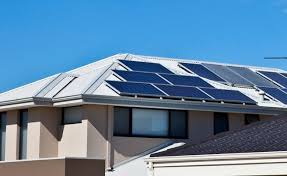
More than 3 gigawatts of solar power has now been installed on Australian rooftops, which will produce enough energy over the next year to run Melbourne's entire train network for more than a decade, Clean Energy Council Chief Executive David Green said in an address to the Energy Efficiency Council's national conference.

Mr Green said official Clean Energy Regulator figures this week showed more than 3 gigawatts of solar power had been installed across the country, with almost a third of this coming from Queensland alone.
"Household solar power gives consumers more control of their power bills by letting them generate their own electricity from the sun. And it helps to reduce the cost of our entire energy system on hot days when people everywhere have turned on their air-conditioners," he said.
"It has started to change the way we look at energy."
Analysis released by specialist solar consultancy Sunwiz today shows that more than 1.15 million Australian households have installed rooftop solar, with Queensland the national leader. Approximately 360,000 Queensland homes now have solar power, with NSW the next best on 252,000.
According to figures from the Clean Energy Regulator, the 3 gigawatts of solar power installed will produce more than 4000 gigawatt-hours over the next 12 months. This is the equivalent of:
- powering the Sydney Opera House for the next 230 years
- running Canberra's Parliament House for more than 160 years
- lighting up the MCG continuously for almost 520 years
- producing more than 1050 toasted sandwiches for every Australian using a standard sandwich press.
Mr Green said working class suburbs and regional areas had led the charge to go solar, rather than the affluent areas of the major cities.
"Some state governments initially provided generous support to encourage people to go solar, but these programs have all been scaled back as the cost of systems has fallen over the last five years," he said.
"Currently the only support comes from the Renewable Energy Target scheme, which helps to make solar power more affordable and reduce its up-front cost for working families."
- See more at: http://www.cleanenergycouncil.org.au/media-centre/media-releases/december-2013/131204-new-rooftop-solar-milestone.html#sthash.gGVzJNu8.dpufMr Green said official Clean Energy Regulator figures this week showed more than 3 gigawatts of solar power had been installed across the country, with almost a third of this coming from Queensland alone.
"Household solar power gives consumers more control of their power bills by letting them generate their own electricity from the sun. And it helps to reduce the cost of our entire energy system on hot days when people everywhere have turned on their air-conditioners," he said.
"It has started to change the way we look at energy."
Analysis released by specialist solar consultancy Sunwiz today shows that more than 1.15 million Australian households have installed rooftop solar, with Queensland the national leader. Approximately 360,000 Queensland homes now have solar power, with NSW the next best on 252,000.
According to figures from the Clean Energy Regulator, the 3 gigawatts of solar power installed will produce more than 4000 gigawatt-hours over the next 12 months. This is the equivalent of:
- powering the Sydney Opera House for the next 230 years
- running Canberra's Parliament House for more than 160 years
- lighting up the MCG continuously for almost 520 years
- producing more than 1050 toasted sandwiches for every Australian using a standard sandwich press.
Mr Green said working class suburbs and regional areas had led the charge to go solar, rather than the affluent areas of the major cities.
"Some state governments initially provided generous support to encourage people to go solar, but these programs have all been scaled back as the cost of systems has fallen over the last five years," he said.
"Currently the only support comes from the Renewable Energy Target scheme, which helps to make solar power more affordable and reduce its up-front cost for working families."