













Voltimum managing editor James Hunt introduces latest lighting industry technical and standards developments, plus lighting industry trends:

The past decade has been an incredibly exciting one for the global lighting industry because of the LED revolution that is the result of the successful development of affordable white LED lighting.
It doesn’t seem long ago – 12 years or so - that I interviewed Wolf-Dieter Bopst, then OSRAM CEO, in the company’s Munich HQ, who said: “Light emitting diodes, particularly the white LEDs, are opening up entirely new market opportunities, including general lighting in the medium term. The opto semiconductor market will be an important cornerstone for the future of OSRAM.”
Apart from the internationalisation of the group, Bopst's name is very much associated with the boosting of Osram's portfolio expansions, in particular, the group's entry into the opto-semiconductor market for LED development.
Yet at the same time he said that LEDs for general lighting were still a decade away because they were not sufficiently affordable, and in this he was perhaps wrong, because the pace of LED lighting development was such that the technology was being applied considerably sooner than this. Now, of course, the revolution is still gathering place as ever more conventional lighting types – even good and efficient solutions – are being superseded by LED systems.
For example, in its latest company figures, OSRAM’s LED-based business (LED lamps, light engines and LED drivers) showed substantial growth again and reached 39% of total revenue. While the company’s traditional business performed well, despite a still very challenging environment, the market trend toward LEDs has continued to have a negative impact on the firm’s Classic Lamps & Ballasts (CLB).
This situation was broadly reflected at Philips Lighting. In the second quarter of 2014, ended June 30, the company’s LEDs accounted for 36% of lighting sales, up from 25% in the same quarter a year earlier.
Moreover, financial analysts believe that the global LED lighting penetration rate will reach 70% by 2020, but because of the exponential growth and demand for the technology, this might actually grow much faster.
However, there’s always a ‘fly in the ointment’ and in this case it is that high quality LED lighting costs far more to make than the now-banned incandescent lamps, yet the demand is always for ever lower prices. This is causing problems for a number of bona fide manufacturers.
In general, the current R&D drivers of LED lighting development include both LED and organic light emitting diode (OLED) technologies, maximising the energy efficiency these products in the market place, remove market barriers through improvements to lifetimes, light output, colour quality and lighting system performance, reduce costs of LED light sources and luminaires, improve product consistency while maintaining high quality products. The development of suitable standards and testing benchmarks.
Then there is the LENI methodology, which promotes the intuitive use of lighting controls and best practise to minimise energy consumption.
Good news for specifiers and installers
From the lighting designer’s perspective (as well as those of lighting specifiers, contractors and installers’), the news is all good as LED lighting has really significant benefits that can’t be ignored. These include a very long life indeed (if high quality LED light sources are chosen and if they are properly installed with the correct drivers in suitable luminaires), good quality white light with colours available if required, high energy efficiency, low total cost of ownership and very high lighting scheme design flexibility, among others. Even good dimming is now available.
Very importantly, another LED lighting benefit is that it is highly energy efficient – sometimes more so than more conventional very efficient light sources. Bearing in mind therefore that currently, lighting accounts for around 19% of global electricity production, according to the International Energy Agency, and that two thirds of the current lighting is based on older, energy-inefficient technologies developed before 1970, a full switch to the latest LED lighting solutions would provide – it has been estimated - an average of 40% energy savings, and a reduction in CO2 emissions.
Because of these benefits, LED lighting is now being very widely installed – even in domestic homes – and there is a drive to install them into as many applications as possible that previously used conventional lighting technologies.
However, LED lighting technology is not, in fact, suitable for every application. Required illumination patterns and coverage, desired lifetimes (not all LEDs last as long as others, depending on price, application and colour), confusion about advertised light outputs and wattages, dimming possibilities and driver options are all issues that need to be considered before making your choice – conventional or LED?
To find out more about these topics, please read the other articles in this VoltiTECH.
Many opportunities
Important factors driving the LED lighting market include the rapid growth of street lighting systems, the expansion of the technology into the so-called ‘smart cities’ and intelligent lighting control.
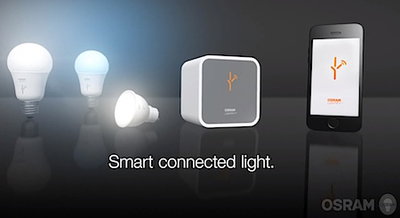
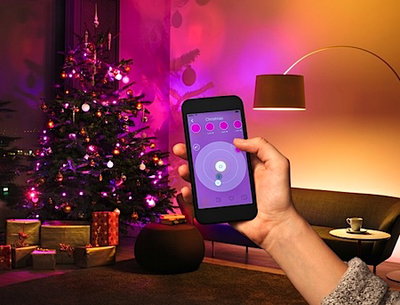
As an example, there’s OSRAM’s LIGHTIFY, which users can control their complete lighting system at home or in the garden just with one app via smartphone or tablet PC. Every LIGHTIFY lighting product can be controlled via a Wi-Fi router and the LIGHTIFY gateway.
There is also the wireless LightwaveRF system, distributed in the UK by Megaman. LightwaveRF is a range of intelligent dimmers, radiator valves, sockets and sensors that are just that little bit smarter. While they look and work just like ordinary dimmers, valves or sockets, they will change the way homeowners and their families control their lighting, heating and power in their homes.
Another technology that is fast becoming very important is the fast expanding ‘Internet of Things’ (IoT), where just about everything can be IP- or otherwise wirelessly connected, i.e. lighting can ‘talk’ with other devices and systems and to your smart phones and tablets.
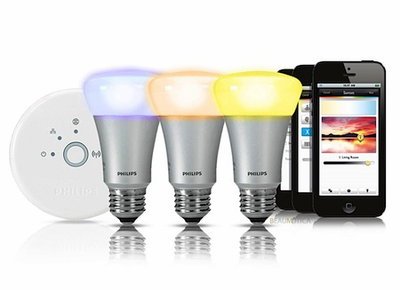
This is happening already, with for example, Philips’ innovative Hue LED lighting system, which is now – proverbially-speaking – in bed with Google’s Nest smart thermostat and security devices.
So wireless networking technologies are bringing intelligence to a new generation of smart lighting. It is partly for this reason that key industry figures predict that IT companies may take a significant share of the wireless lighting controls market in the future – possibly as part of the IoT. LED based lighting devices combined with wireless technologies are changing the market and finding good opportunities.
See more from Voltimum on Google
Add Voltimum as a preferred source and Google will show our articles more often in your news results.